
When the US Department of Energy Tests Your Technology and It Works
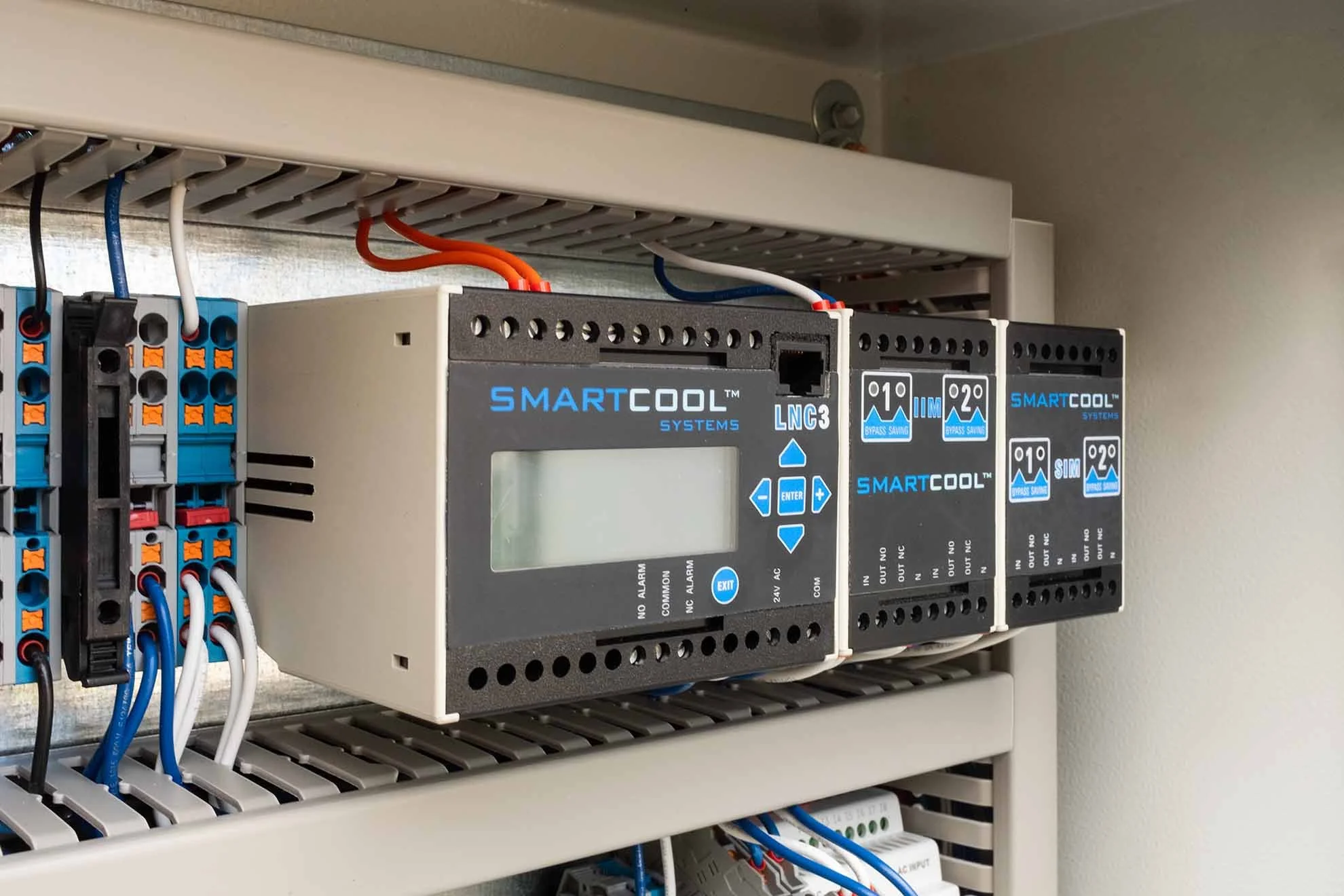
An Installation of the Smartcool ESM
When the US Department of Energy Tests Your Technology and It Works
There's a question that comes up in almost every conversation about compressor optimisation: "How do we know it actually works?"
It's a fair question. Energy efficiency technology has a credibility problem. The market is full of products that promise big savings on glossy datasheets and deliver far less in practice. Building engineers and facilities managers have been burned before. Scepticism is reasonable.
So let's talk about Oak Ridge National Laboratory.
What is Oak Ridge National Laboratory?
Oak Ridge National Laboratory (ORNL) is the largest science and energy research facility operated by the US Department of Energy. Based in Tennessee, ORNL employs more than 6,000 scientists and engineers and has been at the forefront of energy research for over 80 years. Its Building Technologies Center conducts independent performance evaluations of energy-saving technologies: evaluations designed to be rigorous, reproducible, and free from commercial influence.
When ORNL tests your technology, the results mean something.
The Tests
ORNL's Building Technologies Center conducted two independent evaluations of Smartcool's compressor optimisation technology, the ESM (Energy Saving Module).
Test 1: ASDA/Wal-Mart, Sheffield, UK (December 2004)
The first evaluation was a real-world field assessment conducted at a live ASDA/Wal-Mart superstore in Sheffield. ORNL analysed performance data from two refrigeration compressor rack systems (one low-temperature and one medium-temperature) with the ESM active and inactive across separate periods in July and August 2004.
The findings:
Compressor energy consumption was an estimated 5–8% lower with the ESM active across both racks (ORNL's conservative, independent assessment)
Compressor cycling rates dropped by approximately 38% on the low-temperature rack and 31% on the medium-temperature rack
Average compressor run time reduced by 11–19% across the two systems
No negative impact on frozen food product temperature control was observed
ORNL noted that the real-world data available had limitations due to the frequency of readings, and characterised their energy savings estimate as a "pessimistic assessment." The manufacturer's own measurements from the same period suggested savings of 15–20%. ORNL concluded the actual impact fell somewhere between the two.
On the question of food safety, always the first concern for refrigeration applications, ORNL was unambiguous: the ESM had no adverse effect on case product temperatures.
Test 2: Controlled Laboratory Test, Carrollton, TX (August 2005)
Following the Sheffield field evaluation, ORNL recommended a controlled laboratory test to isolate the ESM's impact with greater precision. That test was conducted at the Lennox R&D facility in Carrollton, Texas, under direct ORNL supervision.
The unit tested was a 21-ton Lennox commercial rooftop air conditioner, the same model being installed in new Wal-Mart stores across North America at the time. All variables were controlled: cooling load, outdoor temperature, and indoor conditions were held consistent across baseline and ESM-active test periods.
Results at high cooling load (approximately 70% of rated capacity):
~8% reduction in kWh across the full rooftop unit (temperature-corrected)
~10% reduction in kWh on the compressors specifically (temperature-corrected)
Compressor cycling rates reduced by up to ~40% for two of the four compressors
All savings figures were adjusted to account for equivalent temperature conditions in both test periods, the standard of rigour you'd expect from a government laboratory
ORNL also noted that real-world results in large commercial buildings would likely be more favourable than the lab results, since larger spaces have more stable thermal loads and fewer of the test chamber's constraints.
What This Means in Practice
Two independent ORNL evaluations. Two different applications: supermarket refrigeration and commercial air conditioning. Two different settings: live retail site and controlled laboratory. Consistent findings across both: measurable energy reduction, significantly reduced compressor cycling, and no compromise to temperature control or equipment operation.
The compressor cycling data is worth dwelling on. Every time a compressor starts up, it draws a surge of current and experiences mechanical stress far exceeding normal running conditions. Fewer cycles means less wear, extended equipment life, and reduced maintenance costs, all benefits that compound over the lifetime of the installation. ORNL's data showed cycling reductions of 30–40% in both test environments.
Why This Matters When You're Evaluating Technology
Energy managers and building engineers rightly demand evidence. Not a sales pitch, not a testimonial, but independently verified, methodologically sound evidence from a credible source.
ORNL is that source. Its Building Technologies Center exists specifically to evaluate whether energy-saving products do what they claim. The evaluations are not funded by the technology manufacturer. The results are what they are.
Smartcool's ESM technology has that validation. It is one of a small number of compressor optimisation products anywhere in the market that can make that claim.
Independently Validated. Real-World Proven.
The ORNL testing was conducted in 2004 and 2005. In the two decades since, Smartcool has deployed the technology across hundreds of commercial installations: supermarkets, hotels, hospitals, universities, leisure centres, office buildings, generating measured savings data across every major building type.
The ESM technology has been refined significantly since these evaluations, but the underlying physics of compressor optimisation hasn't changed. ORNL's findings established the scientific foundation that two decades of real-world deployments have since built on.
If you're evaluating HVAC energy efficiency technology and you want to start with the question of independent validation, you now know where Smartcool stands.
Curious about the actual document? Review it yourself here: ORNL ESM Test Report
Smartcool's ESM and ECO3 compressor optimisation technology is deployed across commercial buildings throughout the UK and internationally. Independent results reports are available for individual site deployments. Contact us to discuss your estate.